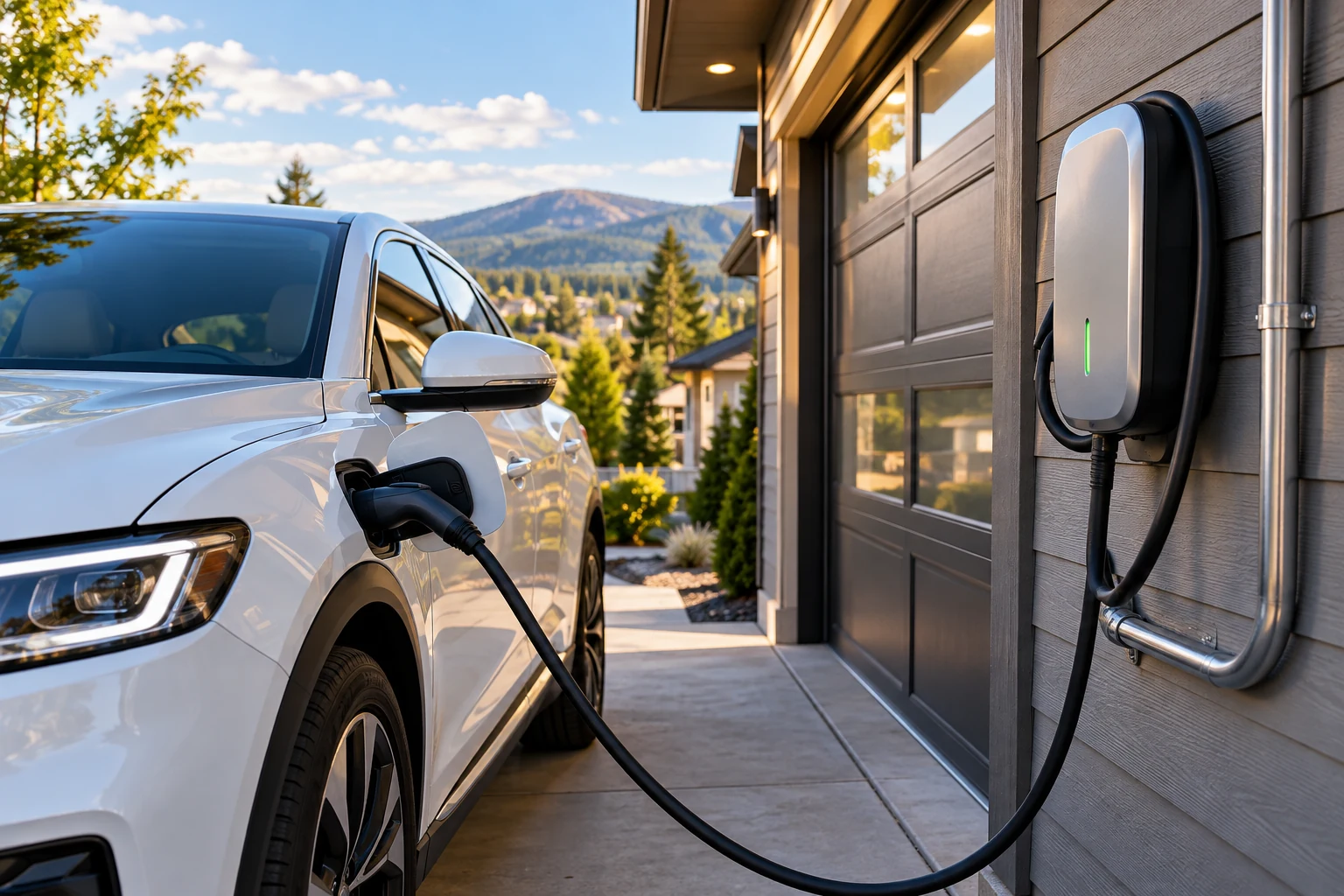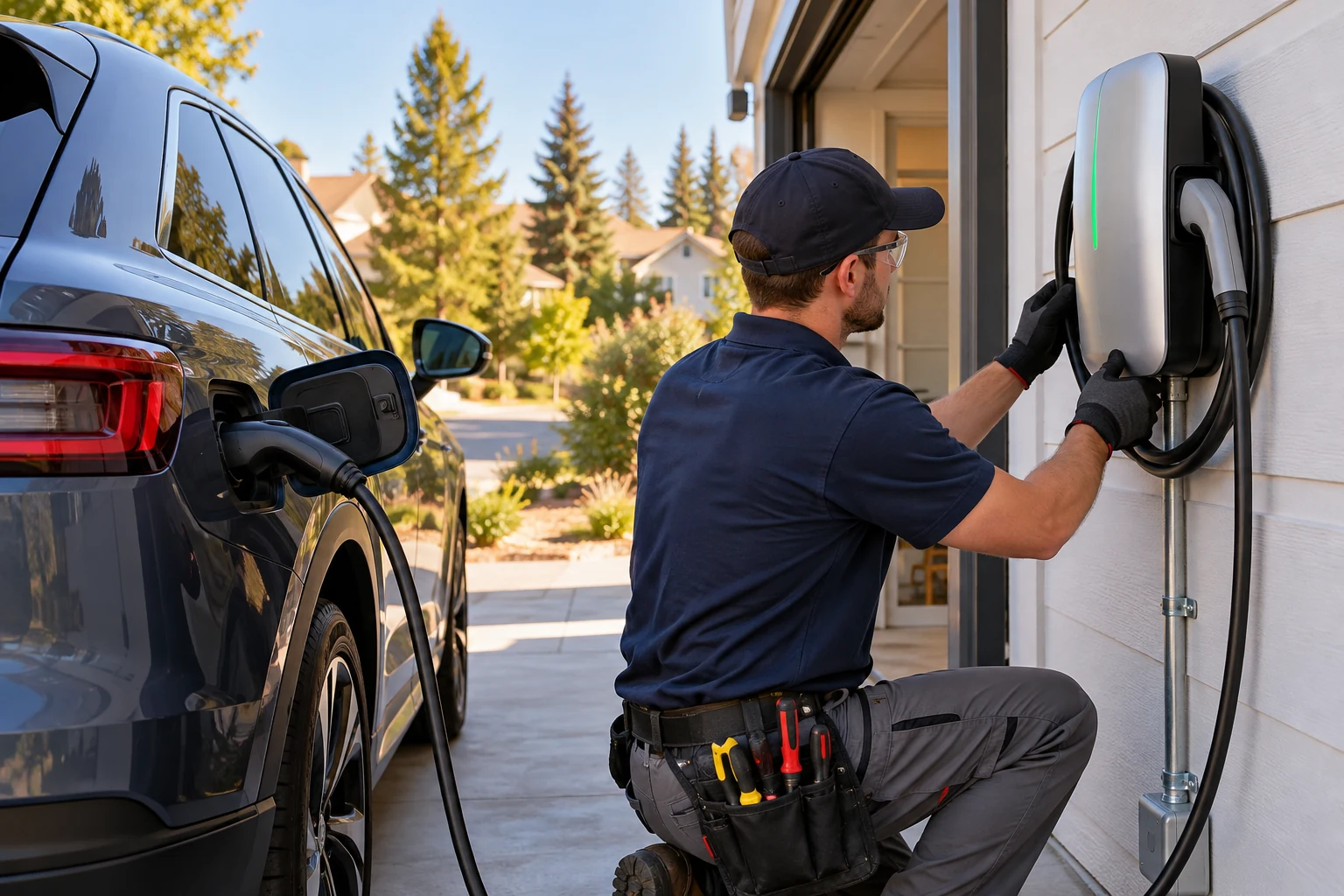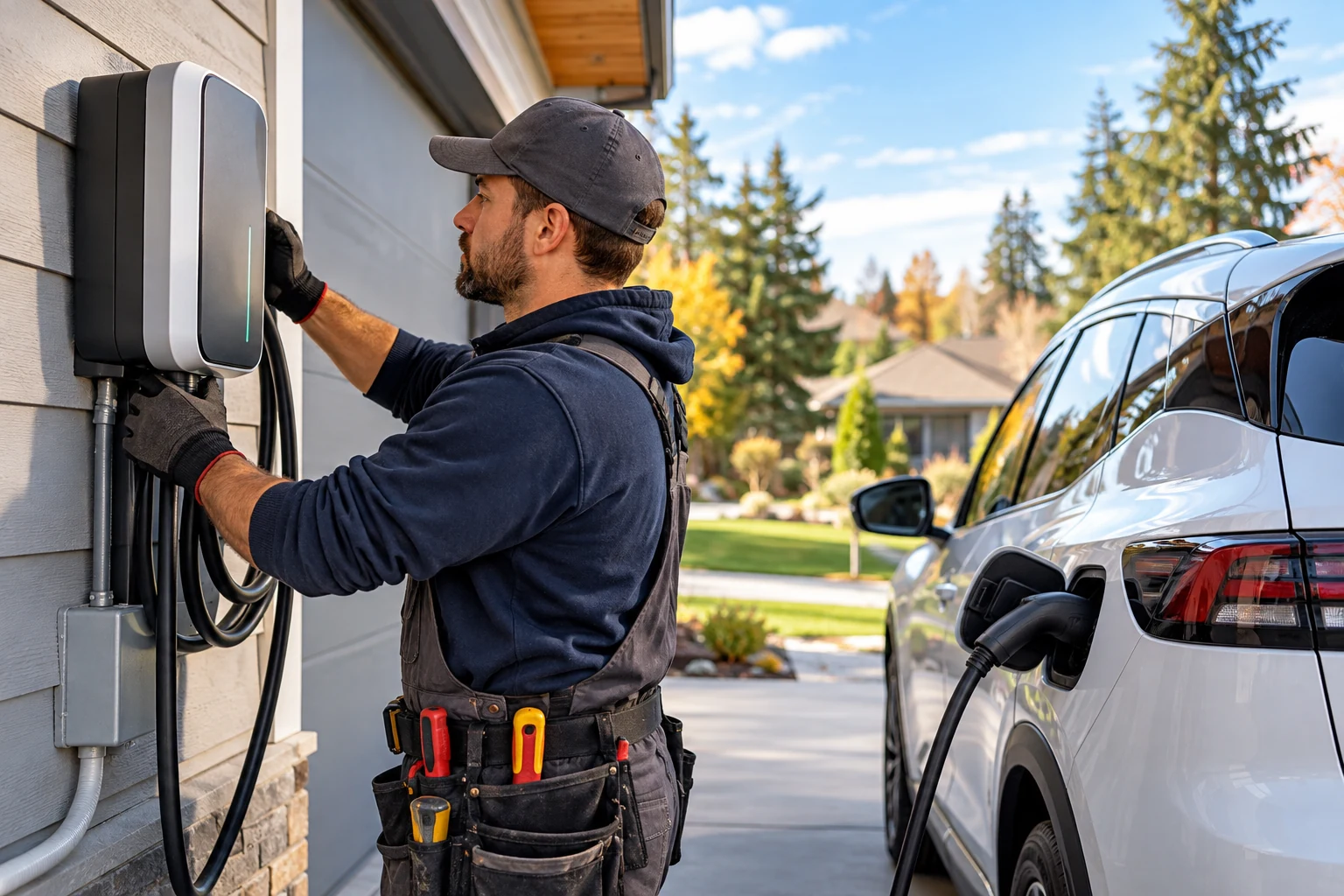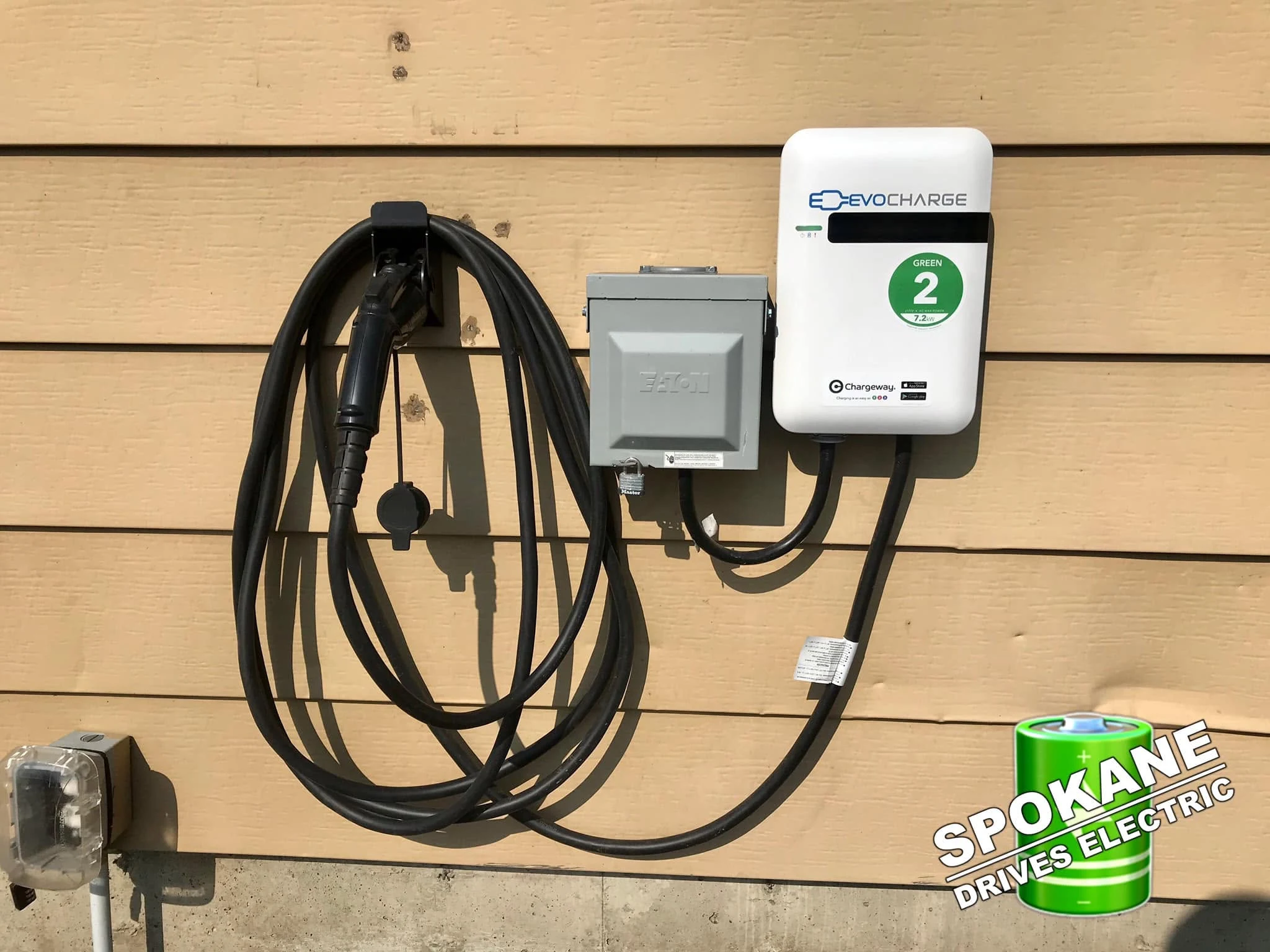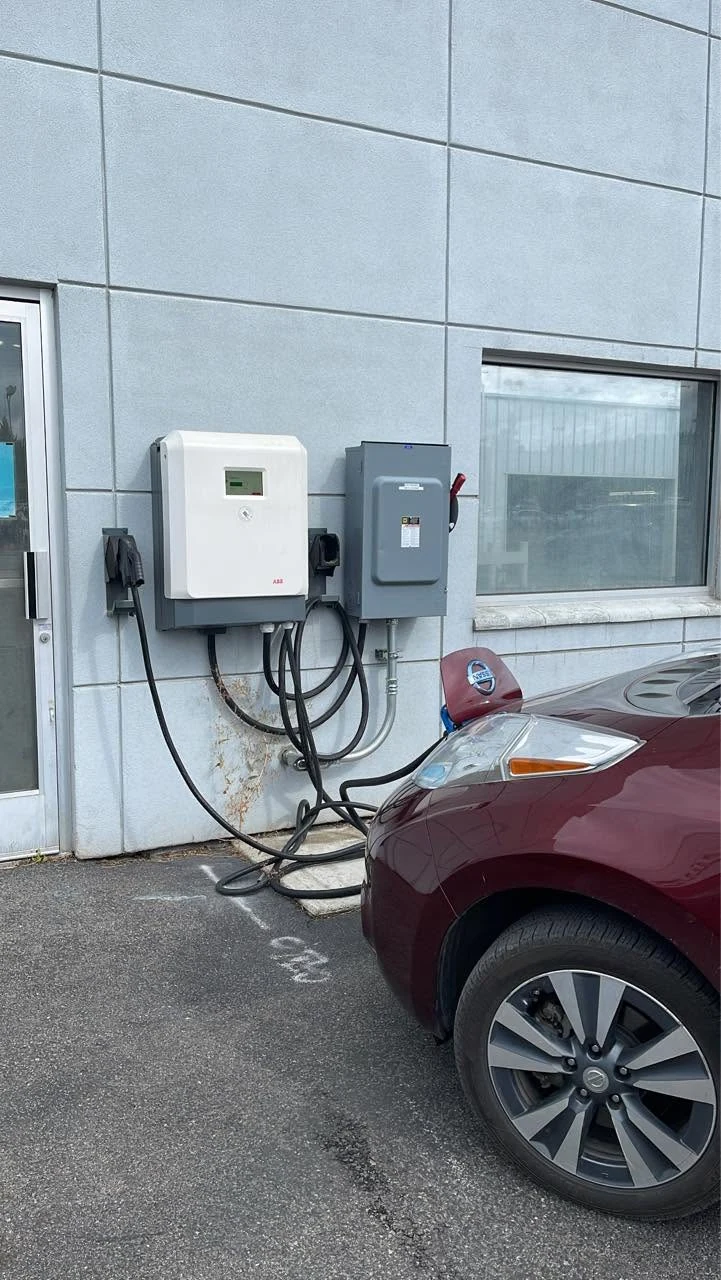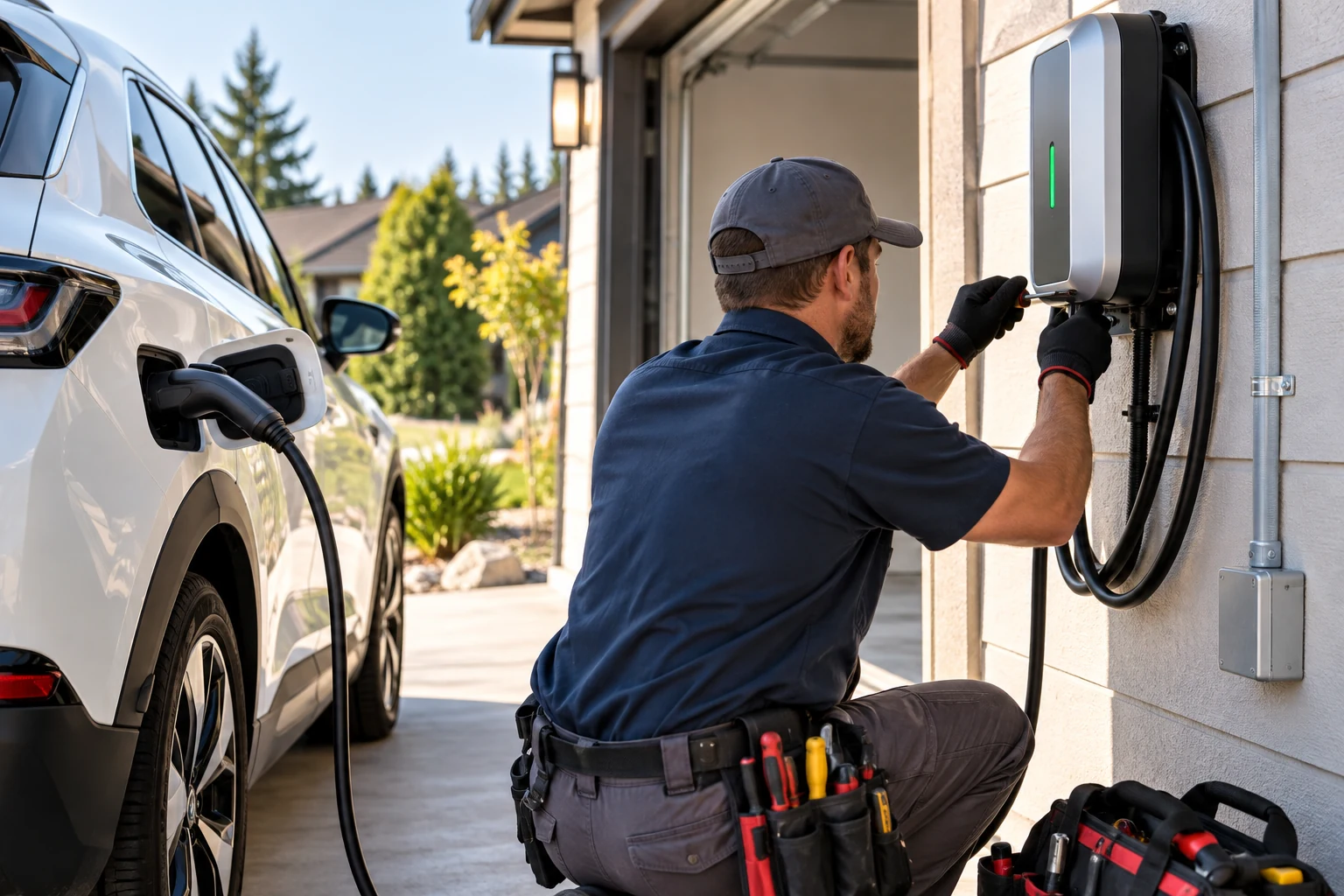
Professional residential Level 2, Tesla Universal Wall Connector, and commercial charging installations across Greater Spokane and Spokane Valley. Certified load audits, basalt rock trenching, City of Spokane permitting, and Avista Schedule 77 rebate assistance.
Get transparent, upfront pricing in minutes
Driving an electric vehicle throughout the Inland Northwest offers unmatched efficiency, smooth mountain torque, and long-term operating savings. However, unlocking the full convenience of an electric vehicle requires a reliable, rapid charging solution right at home. Relying exclusively on commercial DC fast chargers around Downtown Spokane or trickle-charging with a factory 120-volt cord creates unnecessary friction. Professional Level 2 EV charger installation transforms your daily driving experience, allowing you to plug in overnight and wake up every morning with a full battery, regardless of whether you are commuting down the South Hill, driving along the I-90 corridor into Spokane Valley, or traveling north past Wandermere.
Installing an electric vehicle charging station involves significantly more engineering than simply mounting a plastic box onto drywall. An EV charger is the single largest electrical continuous load in modern residential construction. Drawing 32 to 48 continuous amperes for 4 to 10 consecutive hours places rigorous demands on your service panel, residential wiring, conduit, terminal connections, and safety breakers.
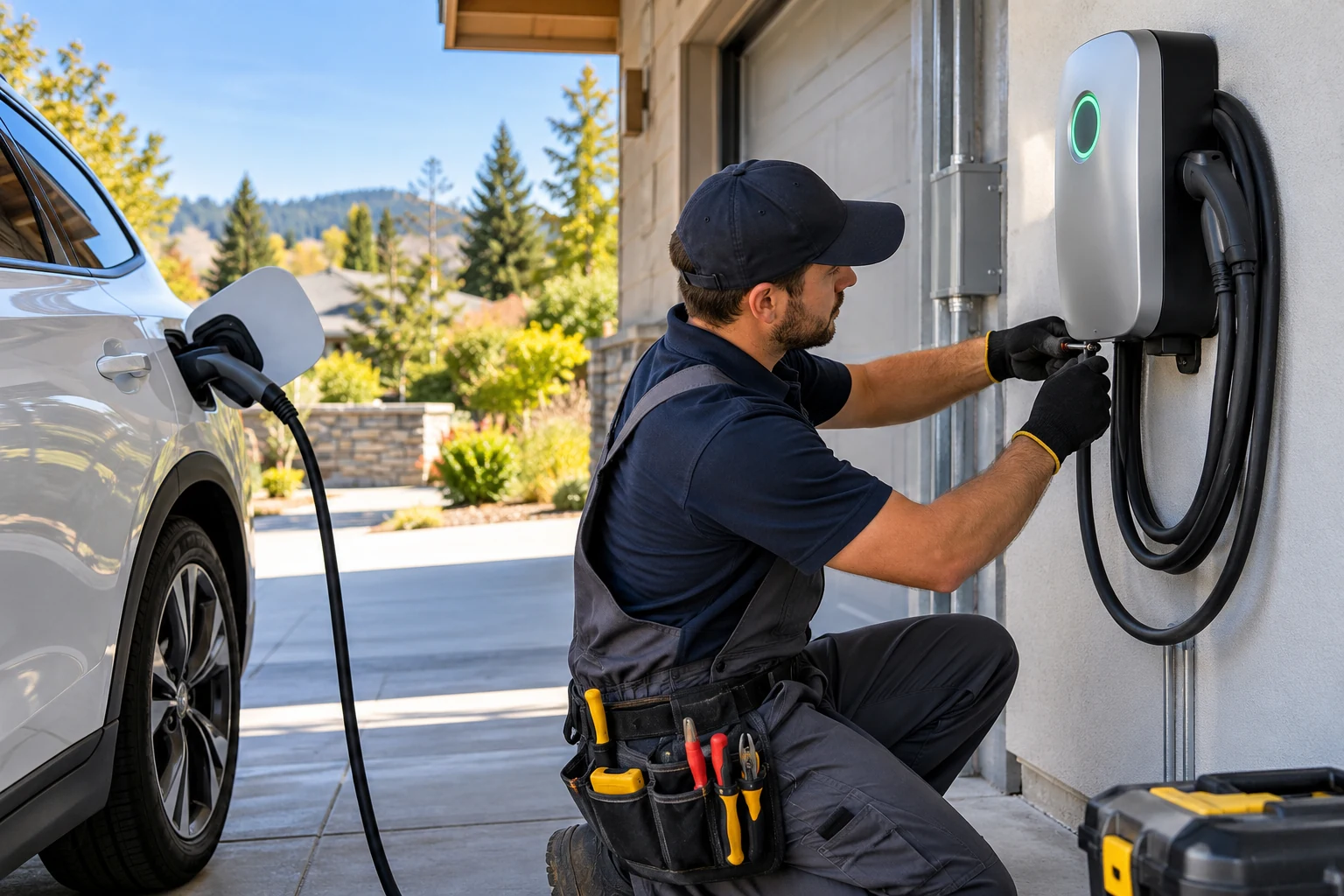
Every property and vehicle pairing requires a tailored electrical configuration. We provide complete, code-compliant installation across all residential, detached structure, and commercial fleet applications.
Dedicated 240V, 32A to 48A circuits delivering up to 45 miles of range per hour. Wake up every morning with a full battery.
Gen 3 and Universal Wall Connectors featuring integrated Magic Dock for Tesla and standard J1772 electric vehicles.
Trenching below frost line, navigating Spokane basalt rock shelves, and calculating voltage drop over 100+ foot runs.
New high-capacity meter base, utility conductors, whole-home surge protection, and full Avista Utilities coordination.
Learn More βAutomatic load-shedding systems (DCC-9 / SimpleSwitch) to safely add high-speed EV charging without an expensive panel replacement.
Learn More βRubberized TPE cables that remain flexible in sub-zero Spokane blizzards and NEMA 4X weather-sealed enclosures for outdoor driveways.
Learn More βSmart networked billing stations (OCPP compliant), ADA-accessible parking design, and utility make-ready grants up to $4,000/port.
Learn More βUnderstanding the electrical distinctions between charging speeds clarifies why a dedicated Level 2 home station is the premier investment for Inland Northwest EV drivers.
| Charging Level | Electrical Supply | Typical Power Output | Miles Added / Hour | Full Charge Time | Spokane Operating Reality |
|---|---|---|---|---|---|
| Level 1 (Trickle) | 120V AC (Standard 15A/20A Receptacle) | 1.0 kW β 1.4 kW (8A to 12A draw) | 2 β 5 miles | 35 β 60+ hours | Severely hindered by Spokane winter cold. Power consumed by battery heater. |
| Level 2 (Home & Workplace) | 208V β 240V AC (Dedicated 30A β 60A Circuit) | 3.8 kW β 11.5 kW (16A to 48A draw) | 18 β 45 miles | 4 β 8 hours | The Gold Standard. Full overnight replenishment during low-cost utility hours. |
| DC Fast Charging (DCFC / Level 3) | 480V 3-Phase Commercial Grid | 50 kW β 350 kW | 100 β 300+ miles (in 20m) | 20 β 40 minutes | Commercial corridors (I-90, Division St). Infeasible for residential due to utility costs. |
During summer months, a standard Level 1 cord plugged into a garage wall might replenish 30 to 40 miles of range over a 12-hour overnight plug-in. However, when Inland Northwest temperatures plummet into the teens and single digits during December and January, an uninsulated garage or driveway can drop below 15Β°F. At these freezing temperatures, lithium-ion battery chemistry becomes sluggish. An EV's internal thermal management system must activate electric battery heaters just to bring the pack up to an acceptable chemical temperature to absorb charge.
Because a Level 1 outlet supplies only 1.2 kilowatts of total power, nearly the entire electrical flow is consumed by the vehicle's internal battery heater, leaving virtually zero energy to replenish actual driving range. Many Spokane EV drivers wake up during January to discover their car gained less than 5 miles of range despite being plugged in for 10 hours. A Level 2 installation delivering 7.6 to 11.5 kW effortlessly overcomes thermal resistance, rapidly warms the battery, and delivers a complete charge every single night.
-40Β°F Cold-Rated TPE Flexible Cables
Spokaneβs distinct four-season continental climate presents unique environmental challenges for electrical vehicle equipment. According to official National Oceanic and Atmospheric Administration (NOAA) climate data recorded at Spokane Felts Field and Spokane International Airport, local winters frequently bring sub-freezing daytime highs, sub-zero overnight lows, heavy snowfall, and freezing rain cycles.
1. Battery Preconditioning on Grid Power: Cold ambient temperatures increase internal electrical resistance within lithium-ion cells, reducing chemical efficiency and available driving range by 20% to 35%. A high-output Level 2 charger allows drivers to schedule preconditioning. Thirty minutes prior to departure, the vehicle draws high-amperage power directly from your home 240V circuit to warm the battery pack and heat the passenger cabin to 70Β°F, preserving 100% of your onboard battery range for your commute.
2. Ultra-Flexible Cold-Rated Cables: Cheap PVC cables turn brittle and rock-hard below 20Β°F. We exclusively specify equipment with specialized Thermoplastic Elastomer (TPE) cables rated to -40Β°F (-40Β°C) that remain supple and easy to coil through the harshest Spokane freezes.
3. NEMA 4X Watertight Exterior Enclosures: For homes without garages (such as Emerson-Garfield, Hillyard, and Peaceful Valley), exterior driveways demand watertight NEMA 4X enclosures, corrosion-resistant stainless brackets, and downward-angled holsters that prevent blowing snow and freezing rain from packing into charging pins.
Installing high-speed EV chargers in Spokane requires specialized engineering for Eastern Washington's volcanic basalt formations, historic 100A panel stock, and extreme Inland Northwest freeze-thaw ground cycles.
South Hill, Five Mile Prairie, and Grandview-Thorpe regularly encounter dense basalt rock shelves just inches below topsoil. We engineer code-compliant Rigid Metal Conduit (RMC) at shallower 6-inch burial depths under NEC Table 300.5, saving homeowners thousands in heavy rock demolition.
Historic craftsman bungalows in Browne's Addition, Cliff/Cannon, and Manito built between 1890 and 1940 often operate on legacy 100A panels. Instead of forcing costly $3,500+ panel replacements, we install DCC-9 Energy Management Systems that automatically shed EV load during peak appliance demand.
Running continuous 40A to 50A power 100 to 200 feet from a front basement panel to an alleyway carriage garage causes severe voltage drop. We calculate electrical resistance under NEC 210.19(A), up-sizing conductors to #4 AWG copper or #2 AWG aluminum to maintain full charging speed without heat buildup.
Municipal codes mandate underground conduits buried below Spokane's 24-inch frost line. To counter frozen winter ground, we drive dual 8-foot copper-clad grounding rods spaced 6 ft apart under NEC 250.53, guaranteeing low-impedance protection against lightning, surges, and sub-zero frost heave.
Honest, competitive rates with clear scope definition. Every quote includes comprehensive electrical load audits, City or State permit filing, and guaranteed warranty coverage.
Spokane homeowners served by Avista Utilities can offset project expenditures with up to $1,000 in residential rebates, plus up to 30% in federal energy tax credits (IRS Section 30C) in qualifying census tracts.
Professional installations follow a disciplined quality and safety protocol certified under National Electrical Code Article 625.
We evaluate your service drop, meter base, panel busbar integrity, and execute a formal NEC Article 220 demand load calculation to verify spare electrical capacity.
We align your daily driving mileage and vehicle acceptance rate with the shortest, most aesthetic conduit pathway through crawlspaces, attics, or garage walls.
We file electrical plans directly with the City of Spokane Development Services Center or WA State L&I, securing legal authorization before any work begins.
Installation of a dedicated double-pole 240V breaker, commercial EMT conduit, and individual copper THHN conductors (bypassing low-temperature Romex).
Anchoring securely into structural framing and tightening all electrical lugs to manufacturer inch-pound specifications with calibrated torque tools to prevent arcing.
Phase voltage verification (240V nominal), ground loop continuity testing, GFCI trip thresholds, Wi-Fi connectivity pairing, and live smartphone charge verification.
On-site walkthrough with the municipal electrical inspector, affixing the green approval sticker, and delivering completed documentation for Avista $1,000 rebate reimbursement.
Under National Electrical Code (NEC) 625.42, an electric vehicle charger is classified as a continuous load, requiring conductors and overcurrent devices sized to 125% of continuous amperage.
| Continuous Amperage | Breaker Sizing (125%) | Minimum Copper Conductor | Power Output @ 240V | Approximate Miles / Hr | Compatible Equipment Examples |
|---|---|---|---|---|---|
| 16 Amps | 20 Amp Double-Pole | #12 AWG Copper THHN | 3.8 kW | 12 β 15 miles | Plug-in hybrids (Chevy Volt, Prius Prime), budget Level 2. |
| 24 Amps | 30 Amp Double-Pole | #10 AWG Copper THHN | 5.8 kW | 18 β 22 miles | Homes with constrained 100A panels; dryer circuit tie-ins. |
| 32 Amps | 40 Amp Double-Pole | #8 AWG Copper THHN | 7.7 kW | 25 β 30 miles | Standard portable EVSE cords; excellent universal daily speed. |
| 40 Amps | 50 Amp Double-Pole | #6 AWG Copper THHN | 9.6 kW | 30 β 38 miles | Maximum continuous draw allowed on a NEMA 14-50 plug-in receptacle. |
| 48 Amps | 60 Amp Double-Pole | #6 AWG THHN (75Β°C) | 11.5 kW | 40 β 48 miles | Must be hardwired. Tesla Wall Connector, ChargePoint Home Flex. |
Critical Wire Temperature Warning: While #6 AWG THHN copper wire in conduit is rated for 65 amps under the 75Β°C column (safely handling a 60A breaker for 48A charging), standard #6 AWG Romex (NM-B) is restricted to 60Β°C, rating it for only 55 amps. Connecting Romex #6 to a 60-amp breaker violates Washington code and creates thermal fire hazards. Certified contractors strictly specify THHN in metal conduit.
While 240V plug-in receptacles offer portability, modern electrical safety codes and high-amperage continuous loads strongly favor direct hardwired connections.
Conductors run continuously inside conduit and seat directly into the internal lugs of the charging station.
A heavy-duty 4-prong wall outlet allowing the use of mobile travel charging cords.
Maximize available regional utility rebates, state sales tax exemptions, and federal clean energy credits to drastically lower your out-of-pocket investment.
Residential customers can receive up to $500 to $1,000 cash back for installing a qualifying Energy Star certified Level 2 charger. Requires an official municipal electrical permit release.
Under RCW 82.08.816 and 82.12.816, qualifying equipment and professional labor for EV infrastructure may be exempt from Washington sales tax, saving approximately 9% on total invoices.
Taxpayers residing in eligible low-income or non-urban census tracts in Spokane County can claim a federal tax credit of 30% of total project costs up to $1,000.
Performing non-permitted electrical work in Washington State is illegal, compromises homeowner insurance coverage in the event of an electrical fire, and creates major liabilities during real estate transactions.
Jurisdictional Boundaries:
β’ City of Spokane Properties: Permitted through the City of Spokane Development Services Center located at City Hall (808 W Spokane Falls Blvd) under SMC 17F.050.020.
β’ City of Spokane Valley: Permitted through the City of Spokane Valley Building Department (10210 E Sprague Ave).
β’ Spokane County & Regional Towns: Permitted through the Washington State Department of Labor & Industries (L&I) Spokane Regional Office (901 N Monroe St).
During inspection, inspectors verify proper copper conductor sizing, dedicated continuous load breakers, conduit anchoring every 3 feet, NEC 110.26 panel clearances (36" depth, 30" width), and dual 8-foot driven grounding rods. We manage the entire permit lifecycle from initial blueprint filing to the green approval sticker.
Under Washington State legislation (RCW 64.34.442 and RCW 64.38.060), condominium associations and HOAs cannot arbitrarily prohibit or restrict a unit owner from installing an EV charging station in their deeded parking stall. While HOAs can require architectural compliance and certified electrical contractors, they cannot block your charging rights.
Turnkey Multi-Unit Solutions:
β’ Dedicated Metered Runs: Direct feeds from individual unit meters into parking spaces.
β’ Submetered Commercial Units: Cellular networked chargers that bill users directly and reimburse the HOA.
β’ Smart Power-Sharing Clusters: Allowing 4 to 8 chargers to safely share a single electrical feed without overloading common house panels.
While Spokaneβs public charging network is continually expanding along I-90 and Downtown corridors, home charging delivers staggering financial savings.
| Fuel / Charging Method | Average Local Energy Rate | Annual Cost (12,000 Miles / Year) | Net Annual Savings with Home Level 2 |
|---|---|---|---|
| 100% Home Level 2 Charging (Avista) | ~11.5Β’ per kWh | $418.14 per year (~$35 / month) | BASELINE (Maximum Savings) |
| Commercial Public Fast Chargers (DCFC) | ~45.0Β’ per kWh + Session Fees | $1,636.20 per year (~$136 / month) | Save $1,218.06 Every Year |
| Standard Gasoline Vehicle (28 MPG) | ~$3.85 per Gallon | $1,650.00 per year | Save $1,231.86 Every Year |
By installing a dedicated home Level 2 charging station, you save over $1,200 annually compared to public fast chargers, paying for your entire equipment and installation investment within the first 12 to 18 months of ownership.
"Installed a Tesla Universal Wall Connector in our South Hill garage. Clean conduit bend along the foundation, passed City inspection on the very first walkthrough, and helped us submit the paperwork to get $500 back from Avista. Couldn't ask for better service!"
"Other contractors walked away when they saw the basalt rock shelves in our Indian Trail yard. These guys engineered a 6-inch Rigid Metal Conduit run that was completely code-compliant, saved us thousands in rock demolition, and charged our Rivian R1T flawlessly."
"Our 1960s daylight ranch had a 100A panel with no spare breaker space. Instead of forcing an expensive $4,000 panel replacement, they installed a DCC-9 smart energy manager. Charges our Ford F-150 Lightning perfectly without any breaker tripping."
Our licensed electrical teams provide rapid on-site audits, code-compliant installations, and permit processing throughout Spokane County.
Our regional service radius also extends to Liberty Lake, Mead, Colbert, Cheney, Medical Lake, and the West Plains.
Have questions regarding panel capacity, rock trenching, permits, or Avista utility rebates? Find immediate technical answers below.
Call Electrical DeskContact our local coordination desk to book a technical survey, receive an upfront written estimate, or confirm Avista rebate eligibility.