📞 (509) 800-4136
• LICENSED WASHINGTON (01) ELECTRICAL CONTRACTORS

Detached Garage EV Charger Installation Spokane WA

Underground Trenching, Outbuilding Subpanels, Basalt Bedrock Excavation & Long-Distance Feeder Engineering Across Spokane County.

  • ✓
    NEC Table 300.5 Trenching: Deep trenching for Schedule 80 PVC (18") or shallow rock RMC (6") through Spokane glacial till and bedrock.
  • ✓
    NEC 225 Outbuilding Subpanels: 60A to 125A 4-wire subpanels with floating neutrals and dedicated main disconnect switches.
  • ✓
    Independent Grounding (NEC 250.32): Dual 8-foot copper-clad ground rods driven 6+ feet apart for outbuilding earth dissipation.
  • ✓
    Avista Rebate Qualified: Full municipal permitting and 100% turnkey inspection approval for up to $1,000 in utility rebates.
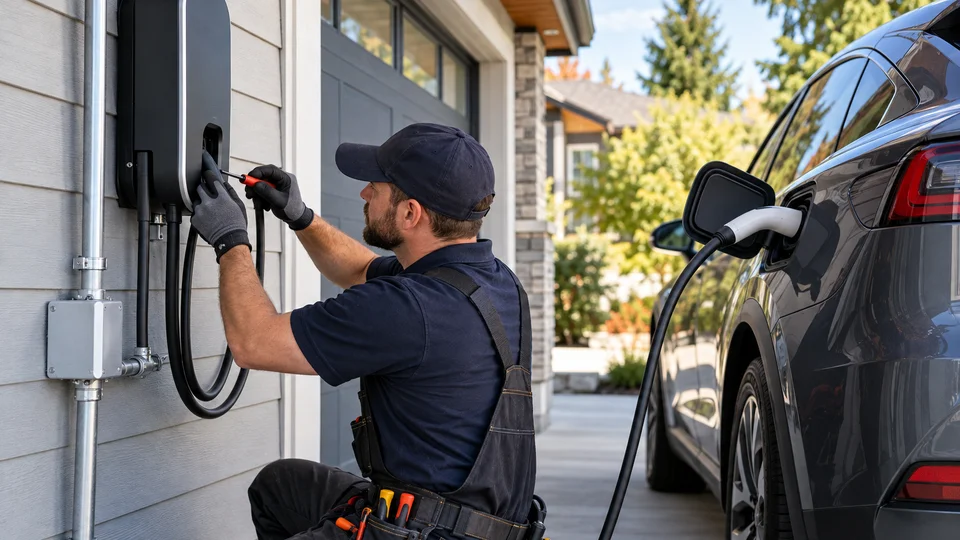
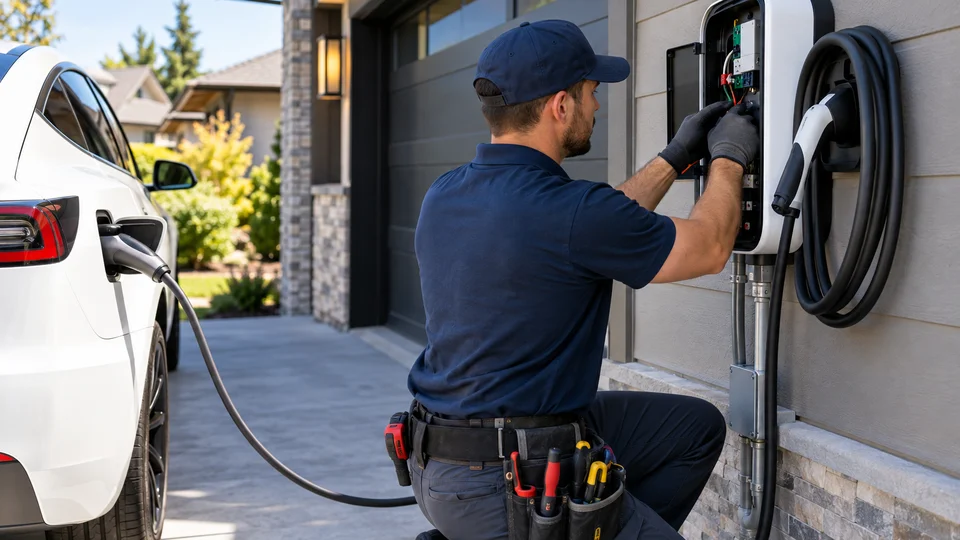
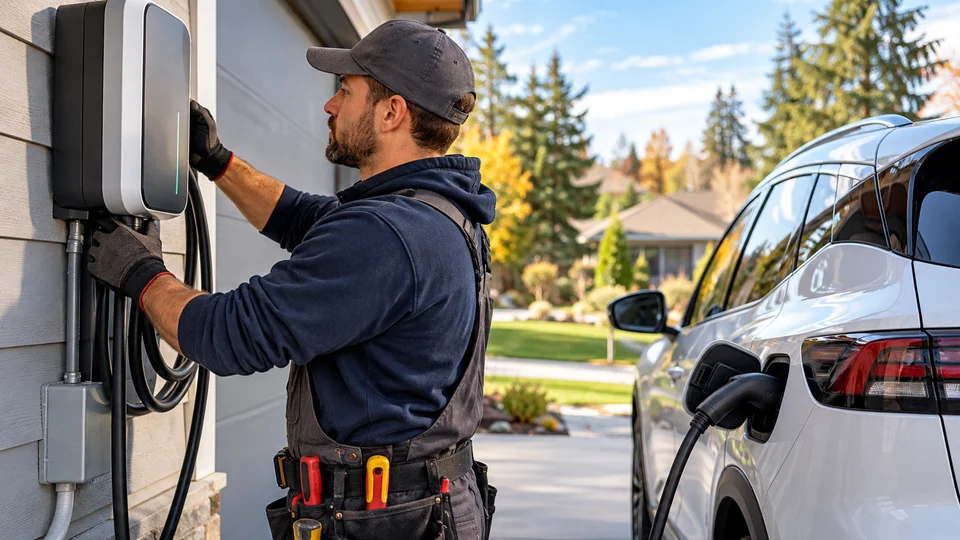
Licensed electrician installing Level 2 EV charging station for detached garage in Spokane WA
● Spokane Outbuilding & Basalt Trenching Specialists

Get a Fast Detached Garage Quote

Schedule an on-site distance audit, trench route assessment, and load calculation.
⚡ Washington (01) Electrical Contractor Lic #EC-SPOKEV*821JA
🛡️ City of Spokane & WA L&I Permitted & Inspected
💰 Avista Schedule 77 Rebate Certified ($500–$1,000)
⛏️ Columbia River Basalt Hydraulic Breaker & HDD Boring
18"
NEC 300.5 Sch 80 PVC Burial Depth
< 3%
NEC Feeder Voltage Drop Limit
4-Wire
NEC 225 Floating Neutral Subpanel
2x 8ft
NEC 250.32 Ground Rod System

Detached Garage EV Charging Architecture in Spokane, Washington

Installing a dedicated Level 2 electric vehicle charging station inside an attached garage is typically straightforward because the primary service panel is often located on an adjacent wall or in an adjoining basement. However, across Spokane's older historic neighborhoods—such as Browne's Addition, Cannon Hill, Corbin Park, and the lower South Hill—as well as expansive semi-rural properties in Colbert, Mead, and Nine Mile Falls, residential parking is frequently situated in detached garages, converted carriage houses, pole barns, or standalone workshop structures.

Distribution Engineering

Continuous Duty Load Demands

Because a Level 2 EVSE pulls a continuous high-current electrical load (typically 32 to 48 continuous amperes under National Electrical Code Article 625) for six to ten hours at a time, you cannot simply plug into an existing 120-volt convenience outlet that currently powers a garage door opener or overhead lighting.

  • ✓
    Continuous Load: 125% branch circuit rating mandate (NEC 625.42).
  • ✓
    No 120V Daisy-Chaining: Overhead door circuits overheat under prolonged draw.
Geological Reality

Basalt Bedrock & Frost Line

Executing a safe, code-compliant, and durable detached garage EV charging setup requires evaluating the existing electrical feeder path, calculating conductor voltage drop across runs spanning 50 to 200 feet, excavating through Spokane's notoriously dense basalt bedrock, and ensuring frost heave protection.

  • ✓
    24" Frost Depth: Spokane municipal building code requires expansion couplings.
  • ✓
    Columbia River Basalt: South Hill volcanic rock requires hydraulic breaker tooling.
Code & Jurisdictions

NEC 225 & Municipal Permitting

Outbuildings introduce strict legal requirements for structural disconnect switches, independent grounding electrode systems (dual ground rods), total separation of equipment grounding and neutral conductors, and securing permits through the City of Spokane or Washington State L&I.

  • ✓
    NEC 225.30: Single feeder mandate requiring subpanel modernization.
  • ✓
    Two-Stage Inspections: Open trench rough-in and final operational approvals.

Attached vs. Detached Garage EVSE Installations: Technical Differences

To understand why a detached garage requires specialized electrical planning, property owners must understand the distinct structural and electrical variables that separate attached installations from detached outbuildings.

Electrical Architecture Comparison

An attached garage allows conductors to remain sheltered inside interior wall cavities, crawlspaces, or surface-mounted interior EMT conduit. In contrast, a detached structure transforms an EV charger into a comprehensive civil and exterior electrical distribution engineering project spanning 50 to 200 feet.

ELECTRICAL ARCHITECTURE COMPARISON ATTACHED GARAGE INSTALLATION DETACHED GARAGE INSTALLATION +-----------------------------------+ +-----------------------------------+ | Main Residence | | Main Residence | | +-----------------------------+ | | +-----------------------------+ | | | Main Service Panel (200A) | | | | Main Service Panel (200A) | | | +--------------+--------------+ | | +--------------+--------------+ | | | | +-----------------|-----------------+ | Short Conduit Run (5-20') | | | | | Underground Trench / Conduit | +--------------v--------------+ | (50 - 200 Feet Distance) | | EV Wall Connector (48A) | | (Basalt Rock Excavation) | +-----------------------------+ | | +-----------------------------------+ +-----------------v-----------------+ | Detached Garage | | +-----------------------------+ | | | Feeder Disconnect / Subpanel| | | +--------------+--------------+ | | | | | +--------------v--------------+ | | | Ground Rods & EVSE Station | | | +-----------------------------+ | +-----------------------------------+
Detached garage 60A to 125A subpanel installation vs dedicated single branch circuit feed in Spokane
Master electrician evaluating feeder routing and exterior building disconnect for Spokane detached carriage house.

Key Environmental & Sizing Differences

Physical pathway and subpanel capacity differ dramatically when exiting the thermal envelope of the primary dwelling:

  • ✓
    Pathway & Environmental Exposure: Detached structures require exterior weatherproofing, underground trenching through glacial soils and rock, transition fittings, expansion joints, and building envelope penetrations.
  • ✓
    Feeder and Subpanel Sizing: While an attached garage charger is fed directly from an individual two-pole breaker in the main panel, a detached garage often requires a larger feeder circuit supplying a secondary distribution subpanel to accommodate both the vehicle charger and existing outbuilding loads.

Outbuilding Rules & Voltage Physics

National Electrical Code outbuilding rules introduce strict compliance mandates designed to safeguard first responders and equipment:

  • ✓
    NEC Article 225 Outbuilding Mandates: Supplying power to an outbuilding introduces strict requirements for structural disconnect switches, independent grounding electrode systems (ground rods), and total separation of equipment grounding and neutral conductors.
  • ✓
    Voltage Drop Dynamics: Over a 100-foot to 200-foot run between a house and an alley-loaded carriage house, conductor resistance causes significant voltage loss, which throttles vehicle charging speeds, generates unnecessary thermal waste, and risks damaging onboard vehicle chargers.

Dedicated Circuit vs. Garage Subpanel: Choosing the Right Strategy

When designing an electrical installation for a detached garage, property owners face a fundamental engineering fork in the road: running a single dedicated high-amperage branch circuit directly to the EVSE, or installing a multi-circuit subpanel inside the detached structure.

Engineering Feature Option A: Dedicated Branch Run Option B: Detached Garage Subpanel
Electrical Code Mandate (NEC 225.30) Permitted ONLY if no other branch circuit feeds the garage structure Mandatory if garage already has or will have other electrical circuits
Continuous Amperage Capacity Fixed strictly to EVSE rating (e.g., 40A or 50A breaker) Supplies 60A to 125A total capacity for EVSE, tools, doors, and lighting
Future Expansion Flexibility Zero expansion capacity; cannot add extra outlets or heat pump Excellent; accommodates second EV, workshop welder, or battery storage
Upfront Installation Cost Profile Lower material cost; avoids secondary subpanel hardware Higher initial investment; includes panel box, extra breakers, ground rods
Disconnect Requirement at Structure Requires local disconnect switch rated for continuous duty Subpanel main breaker serves as the compliant building disconnect

The NEC 225.30 Single Feeder Rule

A critical code mandate that catches many DIYers and inexperienced installers off guard is NEC Section 225.30 (Number of Supplies). As a general rule, the National Electrical Code dictates that a building or structure (such as a detached garage) can only be supplied by one branch circuit or feeder.

If your detached garage already has an existing 120-volt circuit that powers an interior overhead lightbulb and an automatic garage door opener, an electrician cannot legally run a second separate 240-volt branch circuit from the main house to the garage. Doing so creates a multi-source shock hazard for first responders and maintenance technicians.

The Two Permitted Solutions in Spokane

To solve the single feeder mandate legally and pass City or L&I inspection, electrical contractors deploy two solutions:

  • ✓
    Decommission Existing 120V Circuit: Remove the old 120V circuit completely, replacing it with a single, high-capacity 240-volt 4-wire feeder that powers a new detached subpanel. The subpanel then branches out to power both the EV charger and lighting circuits.
  • ✓
    Subpanel Modernization (Recommended): Installing a modern 60-amp, 100-amp, or 125-amp subpanel is the code-preferred and technically superior solution across Spokane County, providing clean future-proof power for multiple vehicles and workshop equipment.

Trenching Methods, Conduit Types, and Burial Depths (NEC Table 300.5)

Running electrical conductors from the main residence to an outbuilding requires excavating an exterior trench that meets strict National Electrical Code burial depth specifications under NEC Table 300.5.

Wiring Method Min. Soil Cover (Lawn) Under Concrete Driveway Spokane Applicability
Rigid Metal Conduit (RMC / IMC) 6 Inches 12 Inches (Min. 4" slab) Heavy threaded steel; best over solid basalt rock
Schedule 80 Rigid PVC 18 Inches 24 Inches (Subject to traffic) Impact-resistant non-metallic; code favorite in Spokane
Schedule 40 Rigid PVC 18 Inches 24 Inches Allowed underground, but Sch 80 required where emerging
Underground Feeder (UF-B) Cable 24 Inches 24 Inches (In conduit) Direct burial; highly vulnerable to frost rocks
Schedule 80 PVC and RMC conduit trenching meeting NEC Table 300.5 burial depths in Spokane
Underground trenching with laser depth verification meeting NEC Table 300.5 18-inch burial standards in Spokane.

Conduit Material Selection in Spokane

  • ✓
    Schedule 80 Rigid PVC Conduit: The industry-standard choice for residential underground runs in Eastern Washington. Features heavy structural walls engineered to resist physical damage. Washington State electrical inspectors require Schedule 80 PVC wherever conduit emerges above ground and is exposed to damage (such as beside a driveway or along an alleyway).
  • ✓
    Rigid Metal Conduit (RMC): Heavy-wall galvanized steel with threaded couplings. Under NEC 300.5, RMC requires only 6 inches of cover in standard residential soil. While more labor-intensive to bend and thread, it is an invaluable engineering solution in Spokane when traversing shallow volcanic bedrock shelves where digging deeper than 6 to 8 inches is physically impossible.

Why Direct Burial (UF-B) Cable Fails in Spokane

Although direct burial UF-B cable is technically permitted at a 24-inch depth, experienced Spokane electricians rarely use it for high-amperage continuous EVSE feeders:

  • ✓
    Angular Basalt Cobble Hazard: Spokane's glacial till soils contain abundant sharp volcanic gravel. Over successive freeze-thaw cycles, frost heave forces sharp rocks against the unprotected vinyl cable jacket, eventually pinching or shearing conductors.
  • ✓
    Costly Re-Trenching: When a direct-burial cable develops a subterranean phase-to-ground fault, finding and repairing the failure requires excavating the entire yard a second time. Pulling THHN/THWN-2 conductors in Schedule 80 PVC provides lifetime conduit protection.

Overcoming Spokane's Basalt Rock & Frost Line Realities

Spokane's geological history defines its excavation challenges. Much of Spokane County—particularly the South Hill, Five Mile Prairie, Lincoln Heights, and the basalt bluffs overlooking the Spokane River—sits atop massive layers of Miocene-era flood basalts belonging to the Columbia River Basalt Group.

Spokane Trenching Strata & Excavation Strata

When standard walk-behind ditch trenchers strike Spokane's volcanic rock shelves just 6 to 12 inches below the surface, excavation teeth fracture and manual digging halts immediately. Specialized machinery and alternative code pathways must be engaged.

SPOKANE TRENCHING STRATA & CHALLENGES SURFACE (Lawn / Driveway) ------------------------------------------------------- 0 Inches Topsoil & Glacial Loess Silt (Loose & Easy Digging) ....................................................... 4 to 8 Inches Basalt Cobble & Heavy Gravel (Hand Shovels Fail) ~~~~~~~~~~~~~~~~~~~~~~~~~~~~~~~~~~~~~~~~~~~~~~~~~~~~~~~ 12 to 16 Inches (Frost Heave Zone) SOLID COLUMBIA RIVER BASALT BEDROCK SHELF ####################################################### 18+ Inches (Target Conduit Depth) ####################################################### Requires Hydraulic Breaker / Rotary Hammer Excavator!
Directional horizontal boring and hydraulic rock breakers penetrating Spokane basalt bedrock
Mini-excavator hydraulic hammer fracturing Columbia River basalt bedrock for underground electrical raceway.

3 Proven Strategies for Volcanic Bedrock

Professional Spokane electrical contractors deploy three proven techniques to maintain code compliance across rocky ground:

  • ✓
    Hydraulic Rock Breakers: Equipping compact mini-excavators with hydraulic hammer attachments to fracture solid basalt bedrock down to an 18-inch trench depth.
  • ✓
    Switching to Rigid Metal Conduit (RMC): Transitioning to threaded Rigid Metal Conduit achieves legal NEC compliance at a shallow 6-inch burial depth, eliminating thousands in extensive rock demolition.
  • ✓
    Concrete Encasement: Under NEC 300.5, shallow conduit can be laid over rock shelves if fully encased in a minimum of 2 inches of solid structural concrete.

The 24-Inch Frost Line & Expansion Slip Fittings

Spokane's official municipal building frost depth is 24 inches. In winter, sub-zero temperatures penetrate deep into unheated soil, causing clay and glacial silt to expand and heave upward:

  • ✓
    Expansion Couplings Required: Any conduit emerging from the ground must be fitted with NEMA-rated expansion slip fittings where the conduit turns upward into the building envelope.
  • ✓
    Preventing Structural Shear: Without expansion joints, severe ground frost heave lifts the exterior conduit, snapping meter hubs, cracking subpanel boxes, or pulling wire splices apart.

The 100-Foot and 200-Foot Challenge: Managing Voltage Drop

A common question among Spokane property owners with alley-loaded carriage houses or acreage properties is: "Can I run an EV charger 100 or 200 feet out to my detached garage?" The answer is yes—but you cannot use standard wire sizing charts.

The Physics of Voltage Drop

Under NEC Informational Note 210.19(A) and NEC Informational Note 215.2(A)(1), the National Electrical Code strongly recommends that voltage drop on branch circuits or feeders should not exceed 3%, and total combined drop across feeder and branch should not exceed 5%.

SINGLE-PHASE 240V VOLTAGE DROP FORMULA: V_drop = (2 * K * I * D) / CM Where: - K = Resistivity of copper (12.9 ohms-cmil/ft at 75°C) - I = Continuous circuit current (48 Amps) - D = One-way circuit run distance in feet - CM = Conductor cross-sectional area in Circular Mils
Upsized heavy gauge copper conductors mitigating voltage drop over 100 to 200 foot runs
Heavy stranded copper feeder conductors (#4 & #2 AWG) prepared for long-distance underground pull.
One-Way Distance from Main Panel Standard Wire Ga. (Base Ampacity) Voltage Drop % (Uncorrected) Up-Sized Wire Recommendation Corrected Drop % (Code Compliant)
25 Feet (Attached) #6 AWG Copper 0.60% (1.4V loss) #6 AWG Copper 0.60% (Compliant)
50 Feet (Short Detached) #6 AWG Copper 1.20% (2.9V loss) #6 AWG Copper 1.20% (Compliant)
100 Feet (Standard Detached) #6 AWG Copper 2.41% (5.8V loss) #4 AWG Copper 1.51% (Superior Efficiency)
150 Feet (Long Yard Run) #6 AWG Copper 3.61% (8.7V loss)* #3 AWG Copper 1.79% (Compliant)
200 Feet (Estate / Acreage) #6 AWG Copper 4.82% (11.6V loss)* #2 AWG Copper or 1/0 Al 1.45% (Cu) / 1.85% (Al)

*Exceeds the NEC 3% recommended maximum threshold, generating excessive heat and throttling charging speeds.

Consequences of Ignoring Voltage Drop

If an inexperienced installer pulls standard #6 wire across a 180-foot run for a 48-amp EV charger:

  • ✓
    Voltage Collapse: Voltage at the vehicle drops from nominal 240V down below 228V under load.
  • ✓
    BMS Auto-Throttling: The vehicle's battery management system detects the voltage dip, assumes an unstable grid, and throttles charging from 48A down to 32A or 24A.

Thermal Waste & Upsizing Solutions

Upsizing conductor gauge eliminates wasted energy and protects vehicle electronics:

  • ✓
    500+ Watts Continuous Waste: Resistance converts valuable electricity into underground conduit heat, spiking utility bills without charging your battery.
  • ✓
    Sizing to #2 AWG Copper: Sizing up to #2 AWG copper or 1/0 aluminum contains voltage drop to a crisp 1.5%, delivering full 11.5 kW charging power regardless of distance.

NEC Article 225 Outbuilding Code Compliance: Grounding & Disconnects

When power is delivered to a detached structure in Washington State, the installation must adhere strictly to NEC Article 225 (Outside Branch Circuits and Feeders) and NEC Article 250 (Grounding and Bonding). Violating these rules is an immediate cause for failed municipal electrical inspections.

NEC Article 225 Outbuilding Subpanel Architecture

Supplying an outbuilding subpanel requires establishing an electrically isolated neutral system, a local structural main disconnect, and an independent earth grounding electrode field.

NEC ARTICLE 225 OUTBUILDING SUBPANEL ARCHITECTURE MAIN HOUSE SERVICE ENTRANCE DETACHED GARAGE SUBPANEL +-------------------------+ +-------------------------+ | Neutral Bus | | Neutral Bus (FLOATING) | | (Bonded to Enclosure) | | (NO Bonding Screw!) | +------------+------------+ +------------+------------+ | | +=================== 4-WIRE FEEDER =============+ | (2 Hot Legs, 1 Insulated Neutral, 1 Ground) | | | +------------+------------+ +------------+------------+ | Grounding Bus | | Equipment Ground Bus | | (Bonded to Enclosure) | | (Bonded to Enclosure) | +-------------------------+ +------------+------------+ | +------------v------------+ | Grounding Electrode | | Conductor (#6 Copper) | +------------+------------+ | +------------v------------+ | Two 5/8" x 8-Foot | | Copper Ground Rods | | (Spaced 6+ Feet Apart) | +-------------------------+
NEC Article 225 floating neutral subpanel and dual copper ground rod electrode installation
Driving dual 5/8" x 8-foot copper ground rods connected with continuous #6 AWG bare copper wire.

1. Strict 4-Wire Feeder & Floating Neutrals

Under modern electrical codes, all subpanels feeding a detached structure must be supplied by a four-wire feeder (2 Hot Legs, 1 Insulated Neutral, 1 Equipment Ground):

  • ✓
    Floating Neutral Bar: The green bonding jumper screw that bonds the neutral bar to the metal subpanel enclosure must be removed and discarded.
  • ✓
    Preventing Objectionable Current: If neutral and ground are bonded together in the garage, dangerous neutral return currents flow continuously through the earth and metal water lines, creating severe shock hazards.

2. Disconnect & Grounding Electrodes (NEC 250.32)

Outbuildings require autonomous de-energizing capability and local earth dissipators:

  • ✓
    Mandatory Local Disconnect (NEC 225.31): Met by utilizing a subpanel equipped with a main breaker (60A–125A), allowing first responders to instantly isolate the entire garage with one throw.
  • ✓
    Dual 8-Foot Ground Rods: Driven at least 6 feet apart (8 to 10 feet optimal) and connected with an unbroken #6 AWG copper grounding electrode conductor securely clamped with direct-burial brass acorns.

Cold-Weather Charging Dynamics in Unheated Spokane Garages

The overwhelming majority of detached garages in Spokane are uninsulated, unheated wood-frame or cinderblock structures. During Eastern Washington winter cold snaps, the ambient interior temperature of an unheated detached garage drops to parity with outside conditions—frequently settling between -5°F and 15°F for days on end.

Lithium-Ion Battery Cold-Soak Dynamics

Cold electrolyte slows electrochemical ion transfer. Charging a frozen battery without heating causes permanent lithium plating, destroying battery life and cell capacity. The vehicle's internal PTC thermal loop diverts the first 45 to 90 minutes of charging power purely to warming battery coolant.

COLD-WEATHER CHARGING IN DETACHED STRUCTURES DETACHED UNHEATED GARAGE AMBIENT: 5°F (-15°C) +-------------------------------------------------------------------------+ | LITHIUM-ION BATTERY DYNAMICS | | - Cold electrolyte slows electrochemical ion transfer. | | - Charging a frozen battery without heating causes permanent lithium | | plating, destroying battery cell life and capacity. | +------------------------------------+------------------------------------+ | v +-------------------------------------------------------------------------+ | VEHICLE BMS HEATER DEMAND: 4 kW - 6 kW | | - Vehicle's internal PTC thermal loop kicks on immediately. | | - First 45-90 minutes of charging power is purely diverted to warming | | battery coolant up to operational charging threshold (45°F / 7°C). | +------------------------------------+------------------------------------+ | +-------------------------------+-------------------------------+ | | +--------v-------------------------------+ +---------------v-------------------------+ | ON A WEAK 16A / 24A CIRCUIT: | | ON A ROBUST 48A (11.5 kW) CIRCUIT: | +----------------------------------------+ +-----------------------------------------+ | - 3.8 kW total circuit output. | | - 11.5 kW total circuit output. | | - BMS heater consumes 100% of power. | | - 5 kW warms battery in 30 minutes. | | - Net battery range gain: ZERO miles. | | - 6.5 kW simultaneously adds 25 mph. | | - Vehicle fails to charge by morning. | | - Full charge achieved before commute. | +----------------------------------------+ +-----------------------------------------+
Cold-weather EV charging dynamics and battery preconditioning in unheated Spokane garages
Sub-zero EV charging station delivering high-amperage battery conditioning in freezing Spokane winter conditions.

Overcoming Cold-Soak & Preconditioning

In an unheated Spokane detached garage, a 48-amp hardwired Level 2 charging station (fed by a 60-amp circuit) is an engineering necessity:

  • ✓
    Overcoming "Cold-Soak" Threshold: A 48-amp continuous circuit provides abundant power to rapidly warm the pack while simultaneously delivering high-speed energy to battery cells.
  • ✓
    Grid Preconditioning at 6:30 AM: Scheduled preconditioning warms the passenger cabin to 72°F and defrosts the windshield using Avista grid power rather than draining precious battery range.

Sub-Zero Flexible Cable Engineering

Cold-weather hardware specifications prevent daily winter charging frustration:

  • ✓
    Rubberized Sub-Zero Cables: Premium EVSE units feature proprietary synthetic elastomer charging cables that remain flexible down to -40°F.
  • ✓
    Rigid PVC Freeze Failure: Cheap unbranded online chargers use rigid PVC jackets that freeze into stiff, uncooperative coils during Inland Northwest winters, cracking cord seals and stressing vehicle ports.

Wi-Fi Connectivity, Smart Monitoring, & Avista Rebate Eligibility

Modern electric vehicle supply equipment relies heavily on 2.4 GHz Wi-Fi connectivity to support scheduled charging, dynamic power adjustments, firmware updates, and Avista Schedule 77 utility rebate verification.

Bridging the Detached Garage Wi-Fi Gap

A primary failure point for detached garage EV charger installations is lack of reliable Wi-Fi signal. Standard residential Wi-Fi routers located inside the house rarely project a strong 2.4 GHz signal through exterior siding, across a 75-foot yard, and through outbuilding walls.

SOLVING THE DETACHED GARAGE WI-FI GAP MAIN RESIDENCE DETACHED GARAGE +----------------------+ +----------------------+ | Main Home Network | | Wi-Fi Access Point | | Mesh Router | | (Outdoor Rated Mesh) | +----------+-----------+ +----------+-----------+ | | | | +--- 1. Outdoor Wi-Fi Mesh Node / Point-to-Point ----+ | | +--- 2. Cat6 Ethernet Cable Pulled in Conduit -------+ (Must NOT share high-voltage AC conduit!) | v +----------------------+ | Smart Connected EVSE | | (Avista Schedule 77) | +----------------------+
Outdoor Wi-Fi mesh bridge and parallel Cat6 conduit installation for smart outbuilding EVSE
Directional wireless bridge and smart Wi-Fi connected EVSE qualifying for Avista Schedule 77 incentives.

Consequences of Dropped Connectivity

  • ✓
    Lost App Telematics: Homeowners lose remote smartphone preconditioning scheduling and off-peak charging monitoring.
  • ✓
    Disqualified Utility Rebates: Interrupted telemetry can disqualify the customer from ongoing Avista off-peak rewards and Schedule 77 program rebates.

Professional Network Solutions for Outbuildings

  • ✓
    Wireless Point-to-Point Bridge: Directional Ubiquiti or TP-Link bridges mounted on eaves project a robust gigabit link directly across yards.
  • ✓
    Separate Cat6 PVC Conduit: Pulling Cat6 ethernet in a second parallel conduit spaced 12" away. Code Note: Low-voltage ethernet is strictly prohibited from sharing high-voltage AC raceways.

Permitting Jurisdictions: City of Spokane, Spokane Valley, & WA L&I

Every detached garage EV charger installation in Spokane County requires an electrical permit and a certified on-site inspection before the circuit can be energized. Electrical work performed without permits violates Washington State law (RCW 19.28) and can result in utility disconnections, municipal fines, and denied property insurance claims.

Municipal Jurisdiction Permit Office Location Regulatory Code Standard Specific Detached Garage Inspection Focus
City of Spokane (Incorporated Limits) 808 W Spokane Falls Blvd (Development Center) Spokane Municipal Code SMC 17F.050.020 Trench burial depth verification; subpanel bonding screw isolation
City of Spokane Valley (Incorporated) 10210 E Sprague Ave (Permit Center) Spokane Valley Municipal Code Conduit expansion joints; grounding electrode acorn clamp torque
Unincorporated County (Mead, Colbert, Nine Mile) 901 N Monroe St Suite 100 (WA L&I) Washington State WAC 296-46B WAC 296-46B amendments; 4-wire feeder conductor temperature ratings

Stage 1: Open-Trench / Rough-In Inspection

For detached outbuilding projects involving underground raceways, municipal inspectors require a mandatory two-stage sign-off:

  • ✓
    Pre-Backfill Measurement: The inspector inspects the open trench before any dirt is backfilled, measuring conduit burial depth (18" for PVC, 6" for RMC).
  • ✓
    Joint & Fitting Inspection: Confirming solvent cement adhesion on PVC joints, continuous metal bonding on RMC, and placement of expansion couplings.

Stage 2: Final Electrical Tag & Commissioning

Conducted after the subpanel and EVSE station are mounted and wiring terminations are completed:

  • ✓
    Neutral-Ground Isolation: Verifying zero continuity between the floating neutral bus and grounded subpanel chassis.
  • ✓
    Green Approval Tag: Checking calibrated terminal torque, breaker ratings, ground rod resistance, and affixing the official green approval certificate for Avista rebate filing.

Step-by-Step Installation Roadmap for Spokane Homeowners

Executing a detached garage installation follows a disciplined, eight-step engineering roadmap to guarantee code compliance, property protection, and optimal performance across Spokane's rocky terrain:

1

Electrical Service & Distance Audit

The contractor performs an on-site evaluation, calculating whole-home load under NEC Article 220, mapping the physical path across the yard, measuring distance, and calculating required wire gauge adjustments for voltage drop.

2

811 "Call Before You Dig" & Private Locates

By Washington law, calling 811 two business days before excavation is mandatory. In addition, private utility locators map non-public sprinkler lines, propane piping, and low-voltage lighting.

3

Municipal Permitting Filing

The contractor files electrical permit applications with the City of Spokane, Spokane Valley, or WA L&I, submitting feeder schematics, conduit calculations, and trenching profiles.

4

Precision Trenching & Bedrock Excavation

Excavating the trench to an 18-inch (PVC) or 6-inch (RMC) depth. Where basalt rock shelves are struck on South Hill, specialized hydraulic rock hammers fracture the volcanic rock cleanly.

5

Conduit Placement & Open-Trench Inspection

Laying Schedule 80 PVC conduit, gluing joints with heavy-duty solvent cement, securing expansion slip couplings, and hosting the municipal inspector for the open-trench rough-in sign-off.

6

Backfilling & Heavy Conductor Pulling

Backfilling with clean sand bedding to cushion conduit against sharp frost rocks. Pulling heavy-gauge stranded copper conductors (#6, #4, or #2 AWG) using mechanical wire-pulling equipment.

7

Subpanel Mounting, Ground Rods, & EVSE Setup

Seating the detached subpanel, driving two 8-foot copper ground rods 6+ feet apart, torquing terminal lugs to exact manufacturer inch-pound specs with a calibrated torque tool, and pairing the smart EVSE to Wi-Fi.

8

Final Municipal Inspection & Avista Rebate

Passing final electrical inspection and providing the homeowner with signed municipal certificates to claim Avista Schedule 77 EVSE rebates up to $1,000.

Step-by-step detached garage electrical trenching and conduit installation in Spokane
Comprehensive turnkey execution: From 811 utility locates through open-trench inspection and final Avista rebate sign-off.

Complete Cost Breakdown: Detached Garage EV Charging in Spokane

Detached garage installations involve broader labor and materials requirements than attached garage setups. The table below outlines real-world price expectations across the Spokane metropolitan area.

Project Component Typical Cost Range Scope & Material Details
Direct Trenching Labor (Normal Dirt / Lawn) $15 - $25 per linear foot Walk-behind trencher; standard lawn or soft garden soil (18" depth)
Basalt Rock Trenching Labor (South Hill / Rock) $45 - $95+ per linear foot Mini-excavator with hydraulic breaker; solid basalt rock removal
Conduit & Heavy Copper Conductors $12 - $22 per linear foot Sch 80 PVC; #4 to #2 AWG copper feeder conductors + ground wire
Detached Garage Subpanel Package $750 - $1,400 complete 60A–100A main-breaker panel, two 8-ft copper ground rods, disconnect, labor
Core Drilling / Wall Penetrations $150 - $350 per penetration Diamond-core drilling through concrete stem wall or historic stone foundation
Level 2 EVSE Station Hardware (Smart Wi-Fi) $450 - $700 retail Tesla Wall Connector, ChargePoint Home Flex, Emporia, or Autel
Municipal Permits & Plan Review $120 - $280 total City of Spokane, Spokane Valley, or WA L&I electrical permit fees
TOTAL TYPICAL PROJECT INVESTMENT $2,400 - $4,800*
$4,500 - $7,500+**
*Typical 50–100 ft run across normal dirt
**Complex run with heavy basalt excavation
Utility Rebate

Avista Utilities Schedule 77 Rebates

Eligible residential electric customers in Spokane County can recover up to $500 to $1,000 on qualifying smart connected charging hardware and electrical installation labor. Our technicians provide completed municipal inspection documentation ready for immediate rebate submission.

Federal Credit

Federal Section 30C Tax Credit

Property owners located in qualifying census tracts across Spokane County can claim the Federal Alternative Fuel Vehicle Refueling Property Credit of 30% of total hardware and installation costs (up to $1,000 maximum residential credit), substantially offsetting trenching investments.

Safety Warnings: Why Extension Cords & Handyman Shortcuts Fail

Faced with the costs of trenching and subpanel additions, some homeowners consider dangerous shortcuts. Professional electrical contractors strongly caution against two common life-safety hazards:

Hazards of Detached Garage Electrical Shortcuts

Running high continuous electrical loads through temporary flexible cords or legacy ungrounded overhead wiring violates national electrical codes and represents a leading cause of residential outbuilding fires.

HAZARDS OF DETACHED GARAGE ELECTRICAL SHORTCUTS HEAVY-DUTY EXTENSION CORDS UNPERMITTED 3-WIRE OVERHEAD DROPS +------------------------------+ +------------------------------+ | 50-100 Ft Flexible Extension | | Ancient 3-Wire Triplex Feed | | Cord Across Driveway/Lawn | | (Hot, Hot, Bare Neutral) | +--------------+---------------+ +--------------+---------------+ | | v v - Severe terminal overheating - Bootleg neutral ground bond - Voltage drop burns vehicle BMS - Neutral line snap electrifies - Cord casing splits in sub-zero frost garage siding and door track - Extreme electrical shock & fire risk - Catastrophic electrocution risk
Fire hazards of high-amperage EV charging on extension cords and legacy 3-wire overhead drops
Code-certified underground conduit prevents fire hazards, cable pinch points, and lethal neutral return voltage.

The Extension Cord Trap (NEC 400.8)

Operating a continuous 16A to 32A EV load through a flexible extension cord—even one marketed as "heavy-duty 10-gauge"—violates NEC Article 400.8:

  • ✓
    Continuous-Duty Heat Failure: Cords lack continuous-duty terminal heat ratings and melt under sustained multi-hour charging.
  • ✓
    Sub-Zero UV Degradation: Sunlight and Spokane snowpack embrittle vinyl insulation, while garage doors pinching cords create severe arc-fault fire risks.

The Overhead Triplex Shortcut

Stringing aerial overhead cables between house eaves and detached garages introduces severe electrocution risks:

  • ✓
    Ancient 3-Wire Triplex Hazard: Legacy feeds lack an insulated equipment grounding wire. Splicing an EVSE creates an illegal bootleg ground.
  • ✓
    Winter Ice Storm Neutral Snap: If an old neutral wire snaps during a Spokane wind or ice storm, the metal framing of the garage and the vehicle chassis become fully energized at 120 volts.

Troubleshooting Existing Detached Garage EV Charging Circuits

If your detached garage already has an EV charger that is malfunctioning or failing to charge reliably, licensed electrical specialists can diagnose and rectify common system failures:

Voltage Loss

Vehicle Shows "Charging Stopped"

Almost always caused by excessive conductor resistance and voltage drop over runs exceeding 100 feet. Sizing up underground feeder conductors to #4 or #2 AWG restores line voltage above 235V under continuous load.

  • ✓
    Symptom: Charger starts but shuts down after 5 minutes.
  • ✓
    Fix: Pull upsized copper conductors through conduit.
Ground Fault

Breaker Trips Immediately

Caused by illegal bonding between the neutral bus and ground bus inside the detached garage subpanel, or by combining a plug-in EVSE containing internal GFCI circuitry with an upstream GFCI circuit breaker.

  • ✓
    Symptom: Instant breaker trip upon inserting charging handle.
  • ✓
    Fix: Remove neutral bonding screw and isolate bus bars.
Thermal & Wi-Fi

Thermal Cutout / Wi-Fi Drops

Thermal overload caused by undertorqued terminal lugs or builder-grade 14-50 receptacles melting under sustained draw. Evening Wi-Fi disconnects stem from masonry attenuation resolved with directional wireless bridges.

  • ✓
    Symptom: Charger smells hot or drops offline after dusk.
  • ✓
    Fix: Calibrated torque hardwiring & point-to-point bridge.

Frequently Asked Questions: Spokane Detached Garage EVSE

Clear, authoritative guidance from licensed Washington (01) electricians regarding detached outbuildings, basalt trenching, and subpanel engineering.

Need On-Site Engineering Advice?

Speak directly with a licensed Spokane master electrician about trenching routes, basalt rock conditions, and outbuilding subpanel sizing.

Direct Master Electrician Hotline
(509) 800-4136
Operating Hours: Monday – Friday: 7:00 AM – 6:00 PM
Weekend Emergency Service: By Appointment
License: WA #EC-SPOKEV*821JA
Schedule Free Trench Assessment
Can I charge my EV from the existing 120V outlet in my detached garage? +
While physically possible using a Level 1 portable mobile cord, a 120V outlet provides only 1.4 kW of power, recovering just 3 to 4 miles of range per hour. In a Spokane winter, when unheated garage temperatures drop below freezing, virtually all 120V power is consumed by the vehicle's internal battery heaters, leaving almost zero net power to charge the battery. A dedicated 240V Level 2 circuit is essential for practical winter driving.
How deep does the trench need to be between my house and garage? +
Under NEC Table 300.5, rigid non-metallic Schedule 80 PVC conduit requires a minimum of 18 inches of soil cover in residential lawns. If traversing under a concrete driveway or vehicular parking area, depth increases to 24 inches. If rigid metal conduit (RMC) is used over solid basalt rock, minimum depth is reduced to 6 inches.
Do I need to install ground rods at the detached garage? +
Yes. Under NEC 250.32, every detached building or structure supplied by an electrical feeder subpanel must have its own grounding electrode system, which typically consists of two 8-foot copper-clad ground rods driven at least 6 feet apart and connected to the subpanel grounding bus with #6 bare copper wire.
Can I pull my internet cable inside the same conduit as my electrical wires? +
No. National Electrical Code strictly prohibits routing low-voltage data cables (such as Cat6 Ethernet) inside the same conduit raceway as high-voltage AC electrical power conductors. Doing so creates electromagnetic interference that destroys data speeds and creates severe fire and shock hazards if high-voltage insulation fails. Data lines must be routed in a separate parallel conduit spaced at least 12 inches away.
Will trenching ruin my paved driveway or landscaping? +
Not necessarily. Professional electrical contractors use specialized underground directional horizontal boring equipment to drill underneath paved concrete driveways, brick paver walkways, and mature tree root systems without cutting or damaging the surface pavement.
What electrical permit do I need for my detached garage in Spokane? +
If your property is within the City of Spokane, your contractor must pull an electrical permit through the City of Spokane Development Services Center (SMC 17F.050.020). If located in Spokane Valley, permits are issued by the City of Spokane Valley Building Department. In unincorporated Spokane County (Mead, Colbert, Nine Mile), permits are processed by Washington State L&I.
• TURNKEY DETACHED GARAGE INSTALLATION

Connect with Licensed Spokane Detached Garage EV Specialists Today

Powering an electric vehicle in a detached garage requires precision engineering, robust excavation, and adherence to Washington State electrical codes. Sizing conductors for distance, navigating volcanic basalt rock shelves, installing code-compliant subpanels, and securing utility rebates demand experienced tradespeople who understand the unique structural realities of the Inland Northwest.

Request Your On-Site Trench & Subpanel Assessment

Serving City of Spokane, Spokane Valley, South Hill, Five Mile Prairie, Liberty Lake, Mead, Colbert, Nine Mile Falls, Cheney, and Medical Lake.

Spokane EV Charging Specialists · Washington (01) General Electrical Contractor License · Fully Bonded & Insured · Lic #EC-SPOKEV*821JA
Direct Inquiries & Master Electrician Dispatch: +1 509 800 4136